
For years, the hardest question in Liberia's power sector was also the simplest: how much electricity did this household actually use?
Analog meters could not answer it reliably. Readings arrived late or not at all. Bills were estimated, then disputed, then estimated again. Energy that left the substation did not always arrive at a billed account, and nobody could say with confidence where it went. The utility was running a grid it could not see.
That changed on 13 April 2026, when the Liberia Electricity Corporation (LEC) and SENAPT LIB Trading LLC launched Liberia's national AMI smart metering programme at Paynesville City Hall, in Montserrado County. Government officials, lawmakers, international partners and LEC leadership were in the room. LEC's theme for the programme, "Powering Liberia's Future, One Smart Meter at a Time", sat alongside Senapt's own: "Lighting Liberia the Smart Way".
Both slogans describe the same mechanism. You cannot manage a grid you cannot measure.
What the launch actually commits to
Speaking at the launch, LEC Deputy Managing Director for Operations Thomas Z. Gonkerwon framed the programme as the end of a practice, not the start of a product cycle: smart metering removes estimated billing from the relationship between the utility and its customers. LEC Managing Director Mohammed M. Sherif positioned it as part of a wider digital transformation of the corporation's operations and customer service.
Nadeem Ahmad, Managing Director of SENAPT LIB Trading LLC, was blunter about the problem being solved. The partnership, he said, targets the inefficiencies that lead directly to outages and poor service delivery: losses that are invisible on paper but entirely visible in a household's evening.
The commitment is concrete:
Nationwide surveys of residential and commercial electricity users, mapping every connection before a meter is installed
Prepaid smart meters on the STS standard, with real-time consumption data, tamper detection and remote reads
Transformer and feeder-level metering, so energy can be balanced against what customers are billed
Local technician training, so the skills to run the system stay in Liberia
Infrastructure work on the distribution network itself, because meters alone do not fix a grid
How it works for a customer
The customer experience is deliberately familiar. Households buy electricity through mobile money or an authorised vendor and receive a 20-digit token that loads credit onto the meter. Consumption is visible in real time. When credit runs low, the meter warns the customer before the lights go out.
No meter reader at the gate. No bill three months late for a period nobody can reconstruct. No argument about a number that was never measured.
The hardware is matched to the connection rather than sold as one size. Magno 12m single-phase meters handle residential supply and are the workhorse of the rollout. Magno 22 is the compact direct-connect meter for dense urban installs, Magno 33 DC covers three-phase shops, offices and light industry, and MeterLynk customer interface units give households an in-home display of what they are using. Installation takes under an hour, and during the rollout there is no installation fee for existing LEC customers.
Why the substation came first
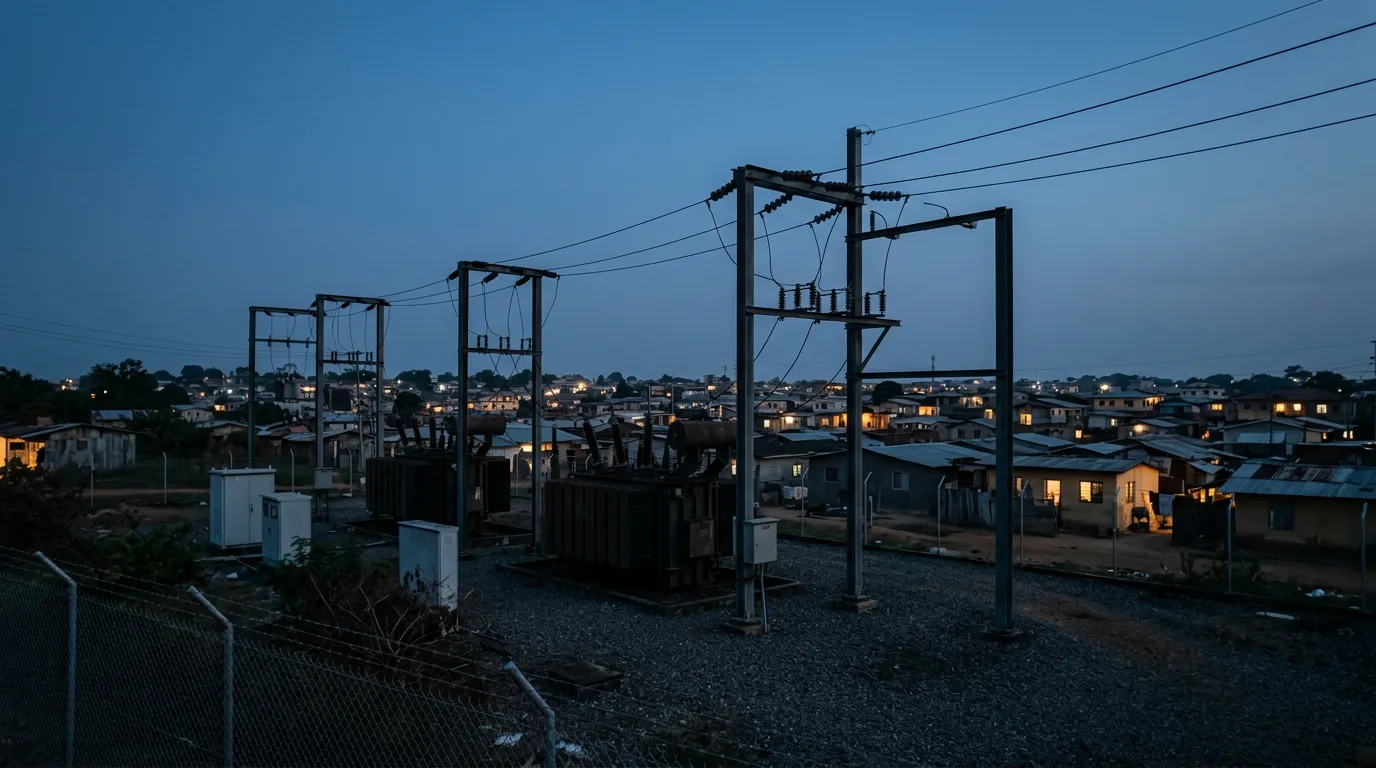
The programme did not begin at the front door. In July 2026, joint Senapt and LEC teams surveyed the LEC Paynesville Substation to determine optimal meter placement across four feeders, then deployed Mega X meters to bring those feeders under continuous monitoring. In August, Magno 33 CT meters went onto each transformer in the project zone, beginning with feeder 1.
That sequence is the whole strategy in miniature. Metering the feeder and the transformer before metering the household is what turns a pile of consumption data into a loss calculation. Energy in versus energy billed, per transformer, per feeder: that is how you find non-technical losses instead of guessing at them, and it is how LEC will be able to prove the programme is working rather than assert it.
Behind the meters sits SIQ, Senapt's software platform: SIQ HES, SIQ MDMS, STS Vending, the national meter and asset databases and loss detection, all on open standards (DLMS, STS, IDIS) with no vendor lock-in. Liberia is not buying a closed box it cannot extend.
What comes next
The rollout is underway across Paynesville and expanding through Monrovia, area by area, with community engagement and enrolment ahead of each wave. Senapt's local office sits at Rehab, opposite Stop & Shop Supermarket in Paynesville City, and customers can reach support on 8080.
A national metering programme is not finished when the first meter is energised. It is finished when a customer in Paynesville can look at a number, believe it, and pay it.
That is the work.